The Plasma Membrane
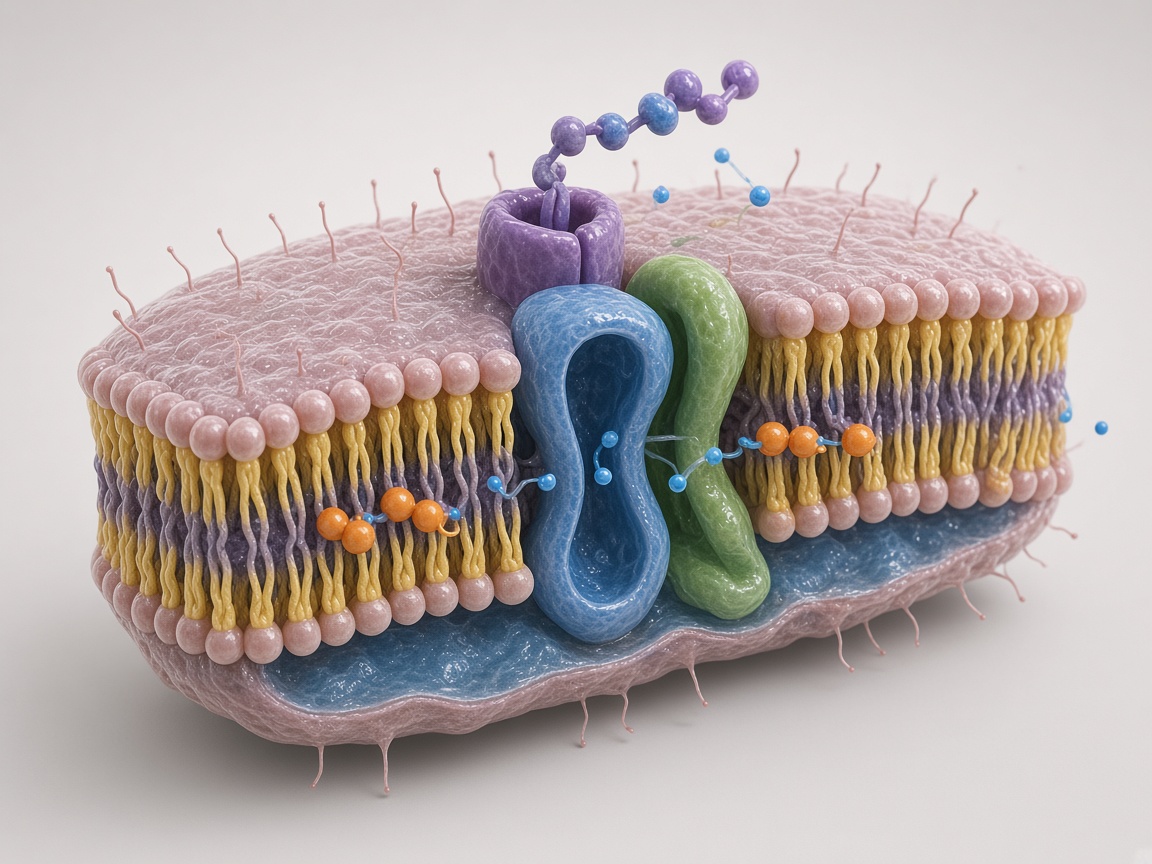
The plasma membrane is a double layer of lipids with proteins floating in it, a design called the fluid mosaic model. It decides what enters and leaves the cell while letting the cell sense its surroundings.
Click a marker or a list item to highlight it.
Labelled parts
Key points
- Phospholipids face their water-loving heads outward and hide their oily tails in the middle.
- Channel and carrier proteins let ions and larger molecules cross when they could not slip through the lipids.
- Sugar chains on the outer surface act as identity tags that other cells can recognise.
Check yourself
Which part of a phospholipid is water-loving?
Check yourself
Why does a charged ion need a channel to cross the membrane?
Explanations rewritten in our own words from Biology 2e, Chapter 5: Structure and Function of Plasma Membranes (OpenStax), licensed CC BY-NC-SA 4.0. openstax.org/books/biology-2e/pages/5-introduction