Red Blood Cell
Blood Cell
About the Red Blood Cell
Blood Cell
Blood vessels
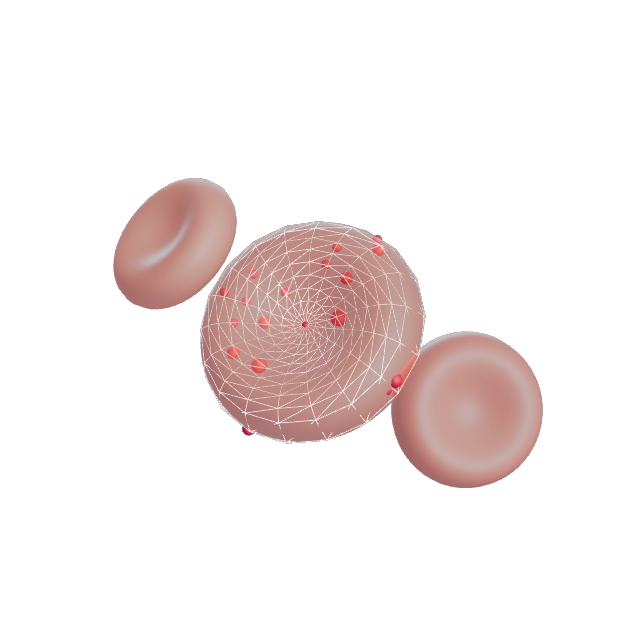
Red blood cells circulate in blood, carrying oxygen from the lungs to tissues and returning carbon dioxide.
Clinical and real-world context
Red cell shape and size on a blood smear help clinicians recognise anaemia, sickle cell disease, and other disorders.
3 structures to explore
Hemoglobin
The oxygen carrier
Each red cell is packed with hemoglobin, a protein that holds iron and binds oxygen in the lungs and releases it in tissues.
One red blood cell holds roughly 270 million hemoglobin molecules.
Biconcave Disc
The flexible shape
The dimpled disc shape gives a large surface for gas exchange and lets the cell bend to squeeze through the narrowest capillaries.
Mature red blood cells in humans have no nucleus and no mitochondria.
Spectrin Network
The elastic mesh
A mesh of spectrin and actin lines the inner side of the membrane, so the cell springs back into shape after being squeezed.
Faults in spectrin can make red cells round and fragile, as in hereditary spherocytosis.