Specimens
Animal & human13
Plant3
Protists & fungi3
Prokaryotes2
Epithelial Cell
Human Tissue Cell
View Mode
Microscope View
Compare Cells
Epithelial CellYou are here
VS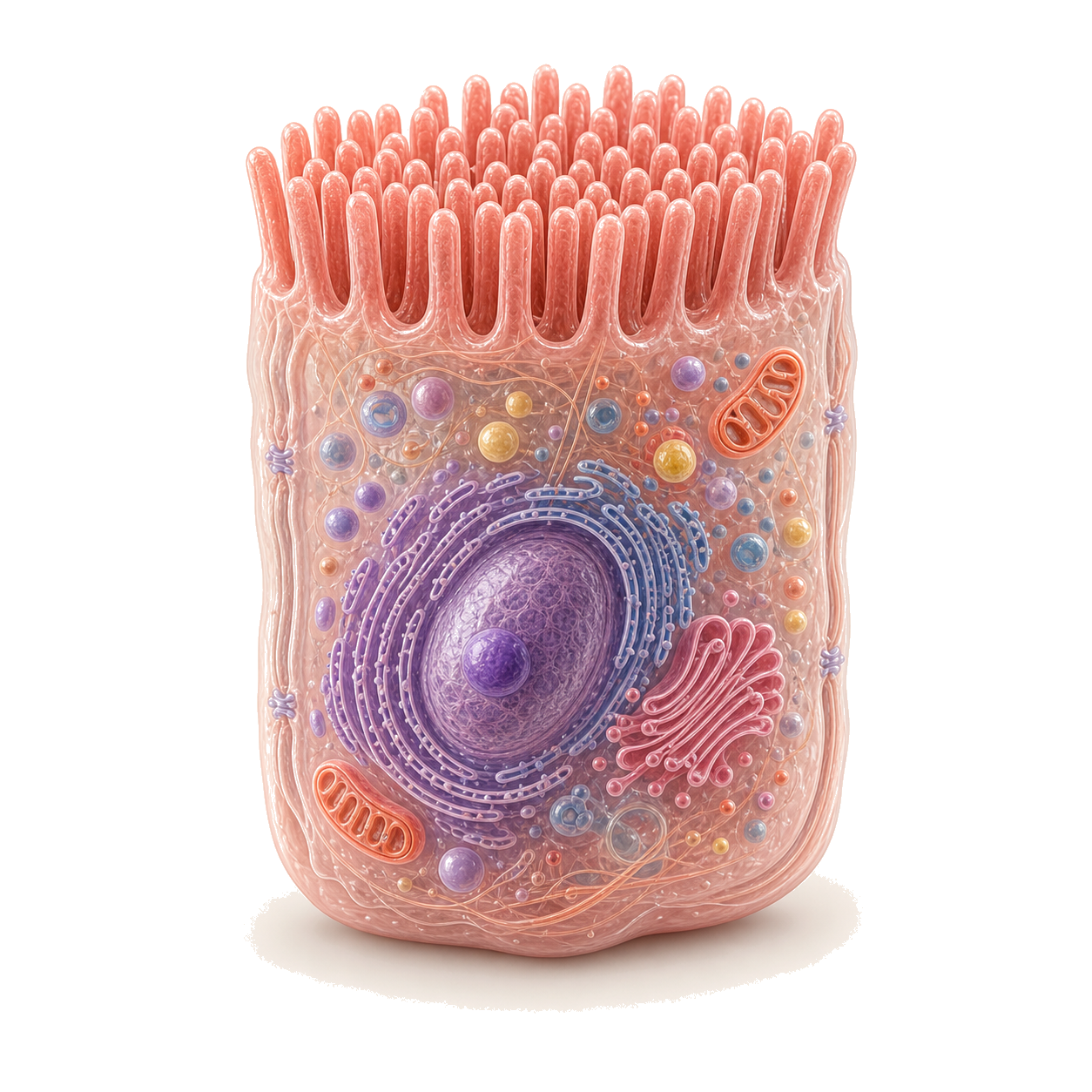
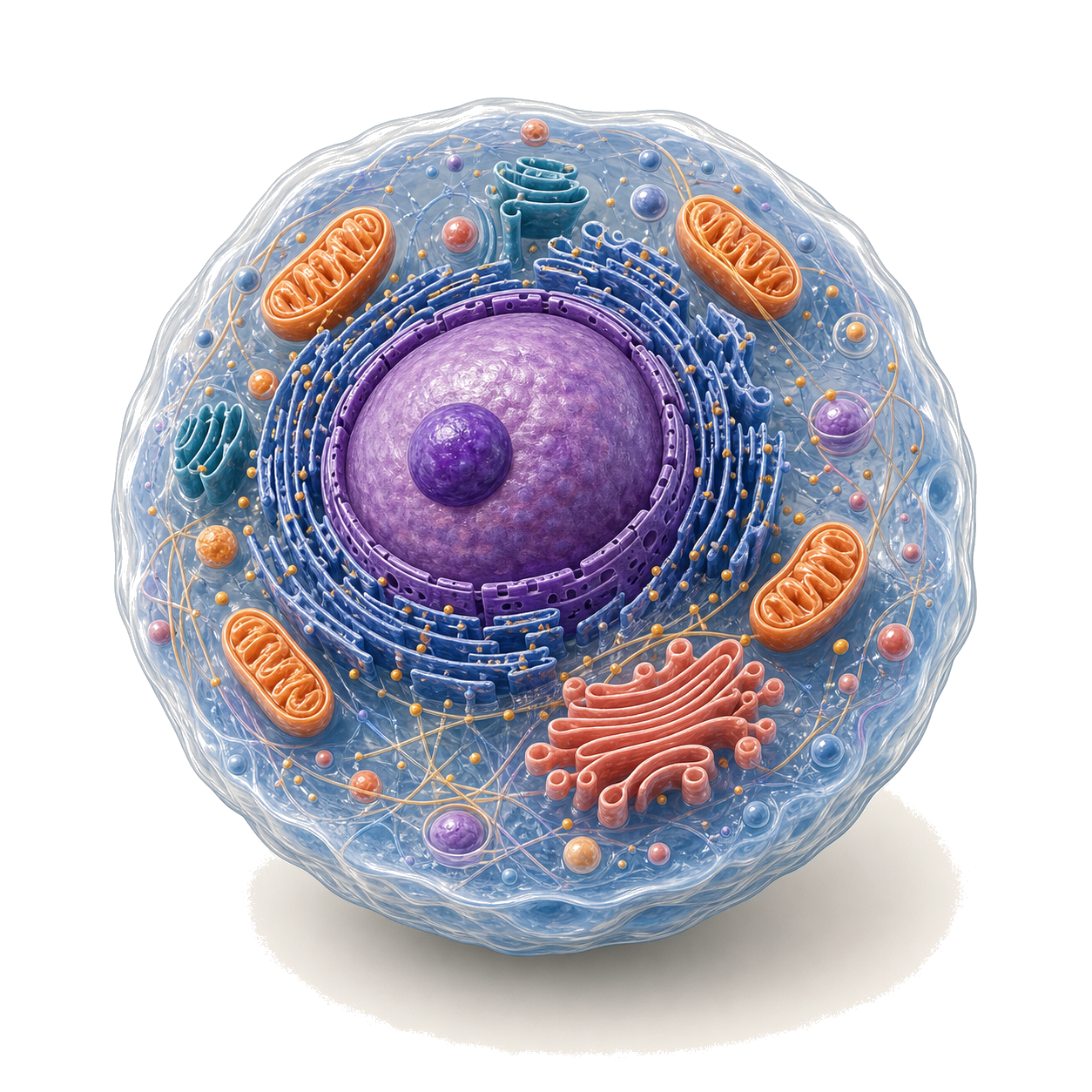
Animal CellEukaryotic Cell
About the Epithelial Cell
Human Tissue Cell
Skin, intestine, airways
Epithelial cells form protective sheets and absorption surfaces across the body.
Clinical and real-world context
Epithelial polarity and tight junctions make this cell type central to barriers, absorption, and pathology slide interpretation.
3 structures to explore
Microvilli
The absorption brush
Microvilli increase surface area for absorption and secretion along epithelial sheets.
Intestinal microvilli form a dense brush border.
Tight Junctions
The sealed seams
Tight junctions link neighboring epithelial cells and control what passes between them.
Epithelial barriers are essential for organ boundaries.
Nucleus
The instruction store
The epithelial nucleus stores genetic information and changes position depending on tissue shape.
Nuclear shape helps pathologists read tissue samples.