Rod Photoreceptor
Light-Sensing Cell
About the Rod Photoreceptor
Light-Sensing Cell
Back of the eye
Rod cells line the retina and detect very dim light, giving us vision in the dark.
Clinical and real-world context
Loss of rod cells causes night blindness, and is a feature of retinitis pigmentosa.
4 structures to explore
Outer Segment
The stack of light traps
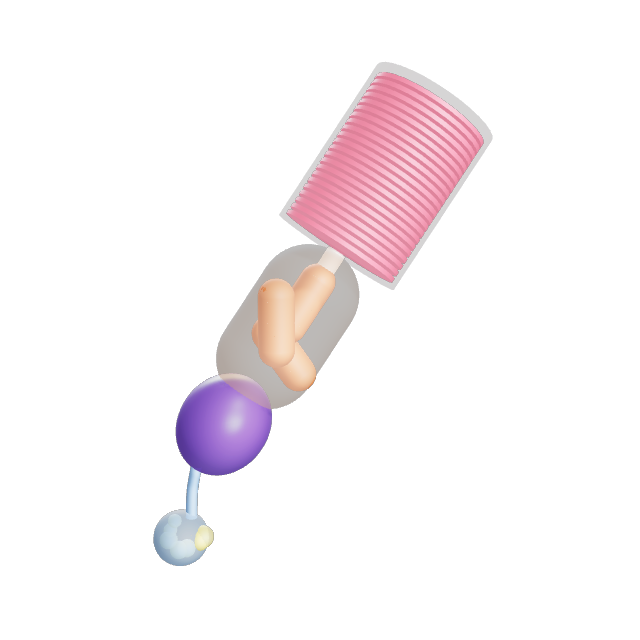
The outer segment is packed with flat membrane discs full of rhodopsin. A single photon can trigger a signal here.
New discs form at the base and old ones are shed at the tip and eaten by neighbouring cells every day.
Inner Segment
The powerhouse
The inner segment is crowded with mitochondria, because maintaining the dark current and rebuilding discs takes a lot of energy.
Rod cells are among the most energy-hungry cells in the body.
Synaptic Terminal
The hand-off
At the base, the rod passes its signal on to bipolar neurons by releasing neurotransmitter. Light actually reduces that release.
In the dark, rods release the most neurotransmitter.
Nucleus
In the nuclear layer
Rod nuclei line up in a dense band called the outer nuclear layer, easy to spot on retina slides.
There are about 120 million rod cells in each human eye.