White Blood Cell
Immune Cell
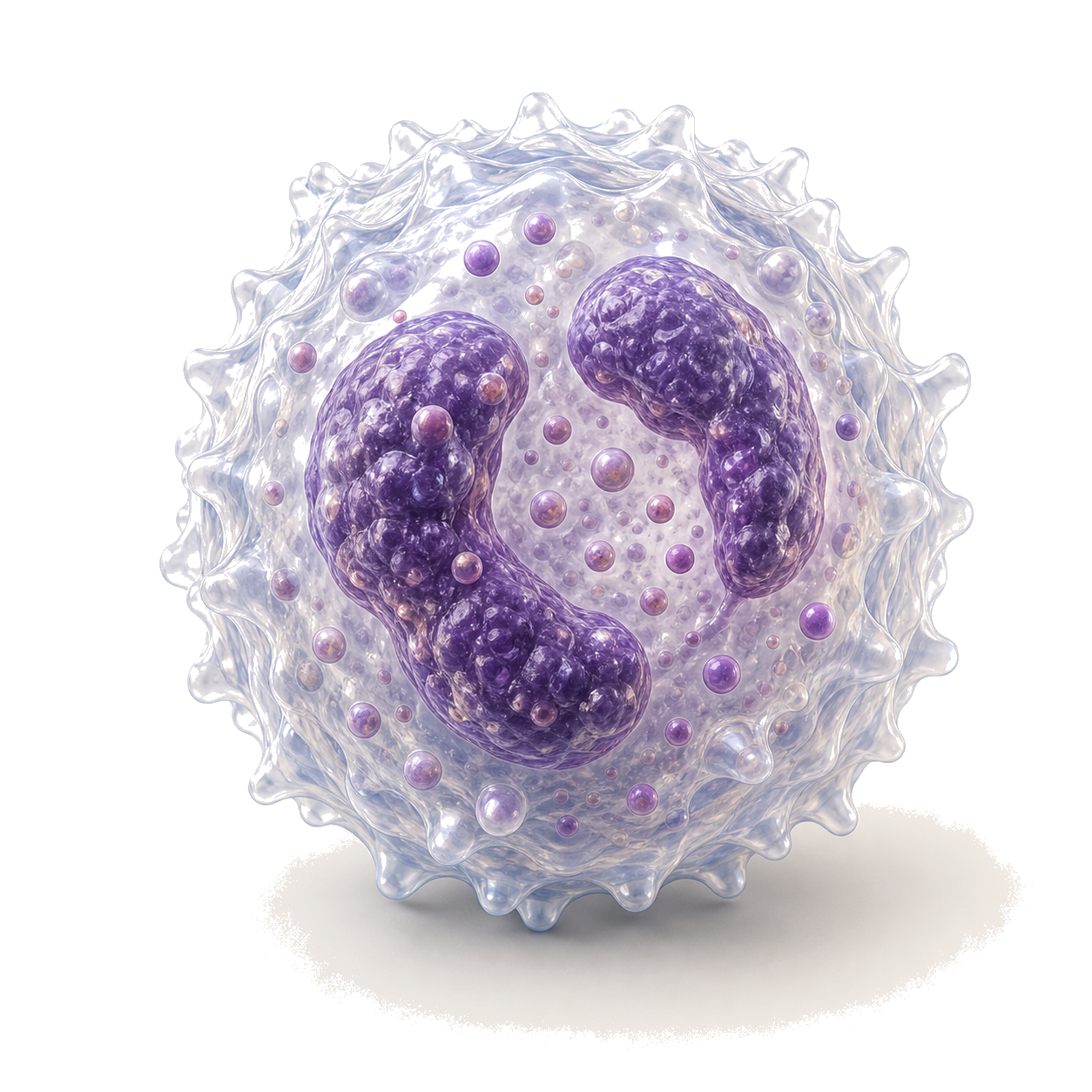
About the White Blood Cell
Immune Cell
Blood, lymph, tissues
White blood cells move through blood and tissue spaces to identify threats and coordinate immune defense.
Clinical and real-world context
Immune cell morphology is a bridge from basic cell biology to how clinicians interpret infection, inflammation, and blood smears.
3 structures to explore
Lysosome
The cleanup vesicle
Lysosomes help immune cells digest engulfed material and recycle worn cellular components.
White blood cells rely heavily on vesicles for defense.
Lobed Nucleus
Flexible genome vault
Many white blood cells have a lobed nucleus that helps them squeeze through tight spaces.
Nuclear shape is one clue used to identify immune cell types.
Granules
The chemical packets
Granules store molecules that help immune cells respond quickly to infection or inflammation.
Some immune cells are named by how their granules stain.