Yeast Cell
Fungal Cell
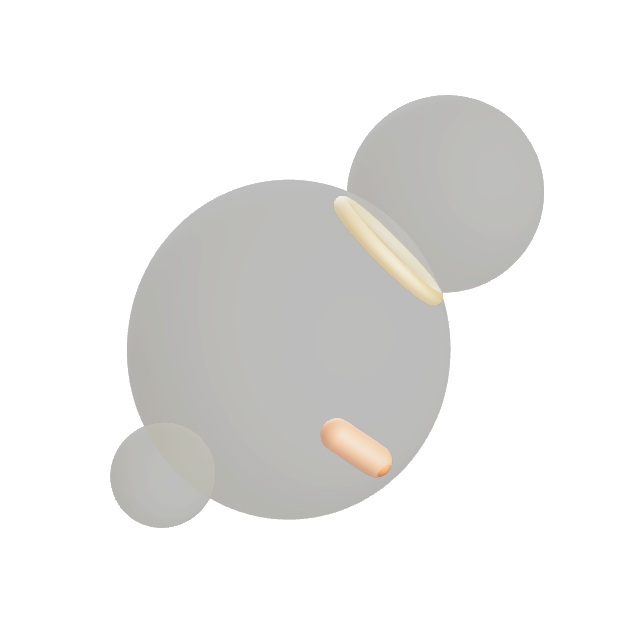
About the Yeast Cell
Fungal Cell
Fruit, soil, bread and brewing
Yeasts live as single cells on sugary surfaces and ferment sugar into alcohol and carbon dioxide.
Clinical and real-world context
Yeasts such as Candida can cause infections, while baker's yeast is a major model organism for cell biology.
3 structures to explore
Bud
The growing daughter
Yeast usually divides by budding: a small daughter forms on the mother, receives a nucleus, then separates.
Each budding leaves a scar on the mother cell's wall.
Nucleus
A true nucleus
Although a single cell, yeast is a eukaryote with a membrane-bound nucleus, which is why it is a useful model for our own cells.
Yeast was the first eukaryote to have its whole genome sequenced.
Vacuole
The recycling store
The yeast vacuole stores ions and nutrients and breaks down worn proteins, much like a lysosome.
Vacuoles split between mother and bud as the daughter forms.