Bacteria Cell
Prokaryotic Cell
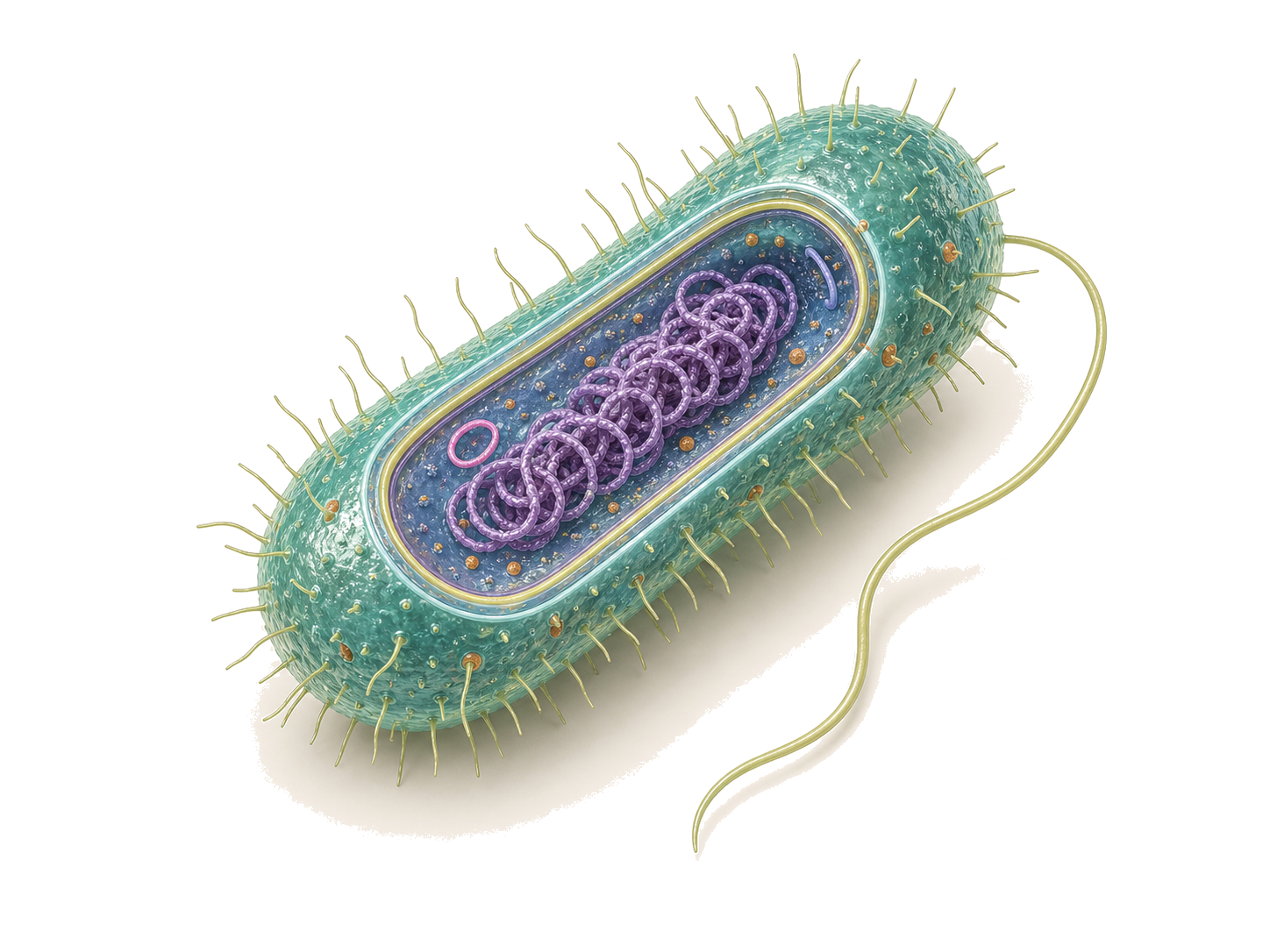
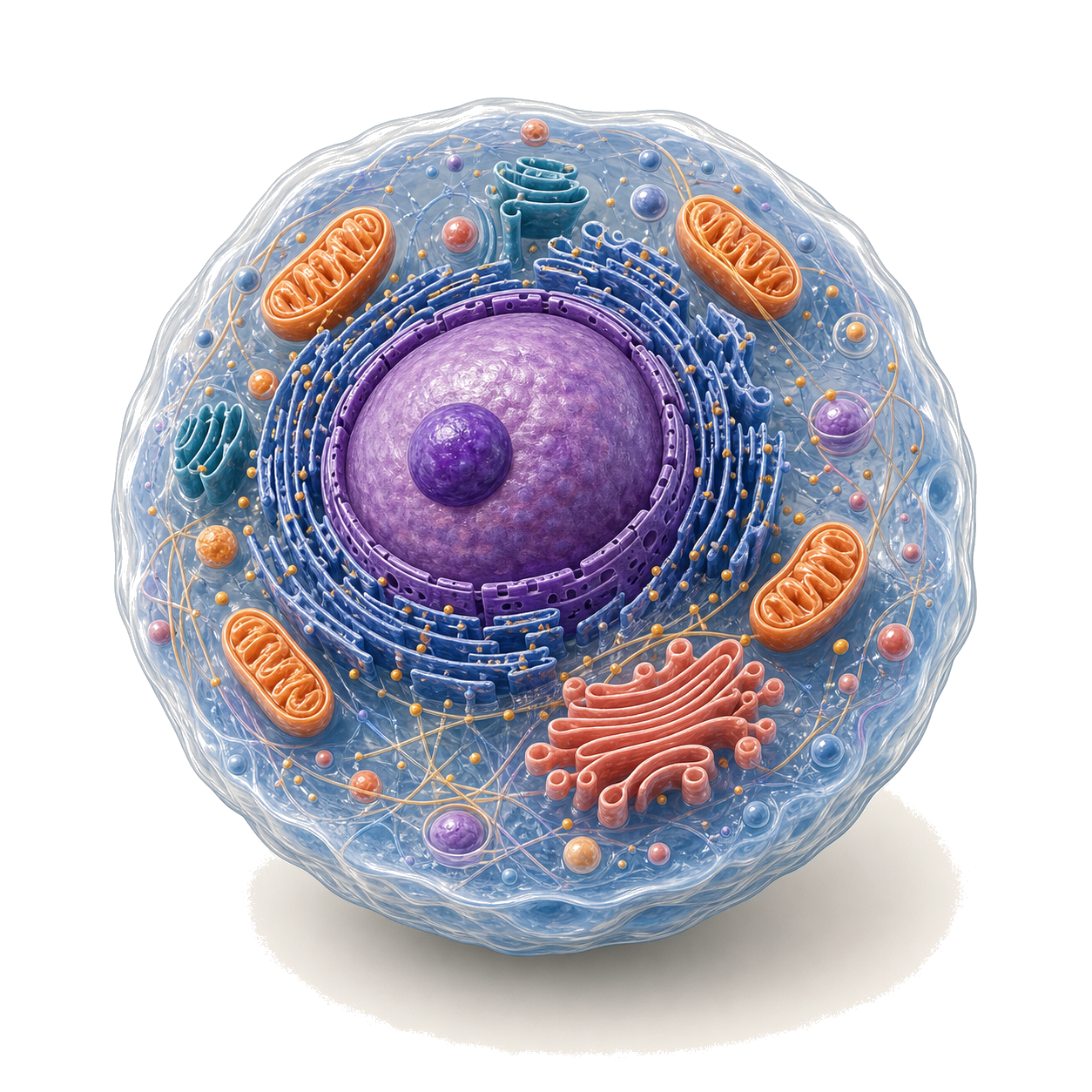
About the Bacteria Cell
Prokaryotic Cell
Soil, water, gut, skin
Bacteria live in nearly every environment and can exist as independent single cells.
Clinical and real-world context
Cell wall structure provides a clinically relevant path from microscopy and Gram staining to antimicrobial mechanism discussions.
3 structures to explore
Nucleoid
The naked genome
Unlike eukaryotic cells, bacteria have no nuclear envelope. Their DNA floats in a cytoplasm region called the nucleoid.
There are more bacterial cells in your body than many people expect.
Cell Wall
The protective shell
The bacterial cell wall helps cells resist pressure and gives many species their characteristic shapes.
Gram staining reveals differences in bacterial wall structure.
Flagellum
The swimming tail
Some bacteria rotate flagella like tiny motors to move through liquid environments.
Bacterial flagella are powered by ion gradients.