Plant Cell
Eukaryotic Cell
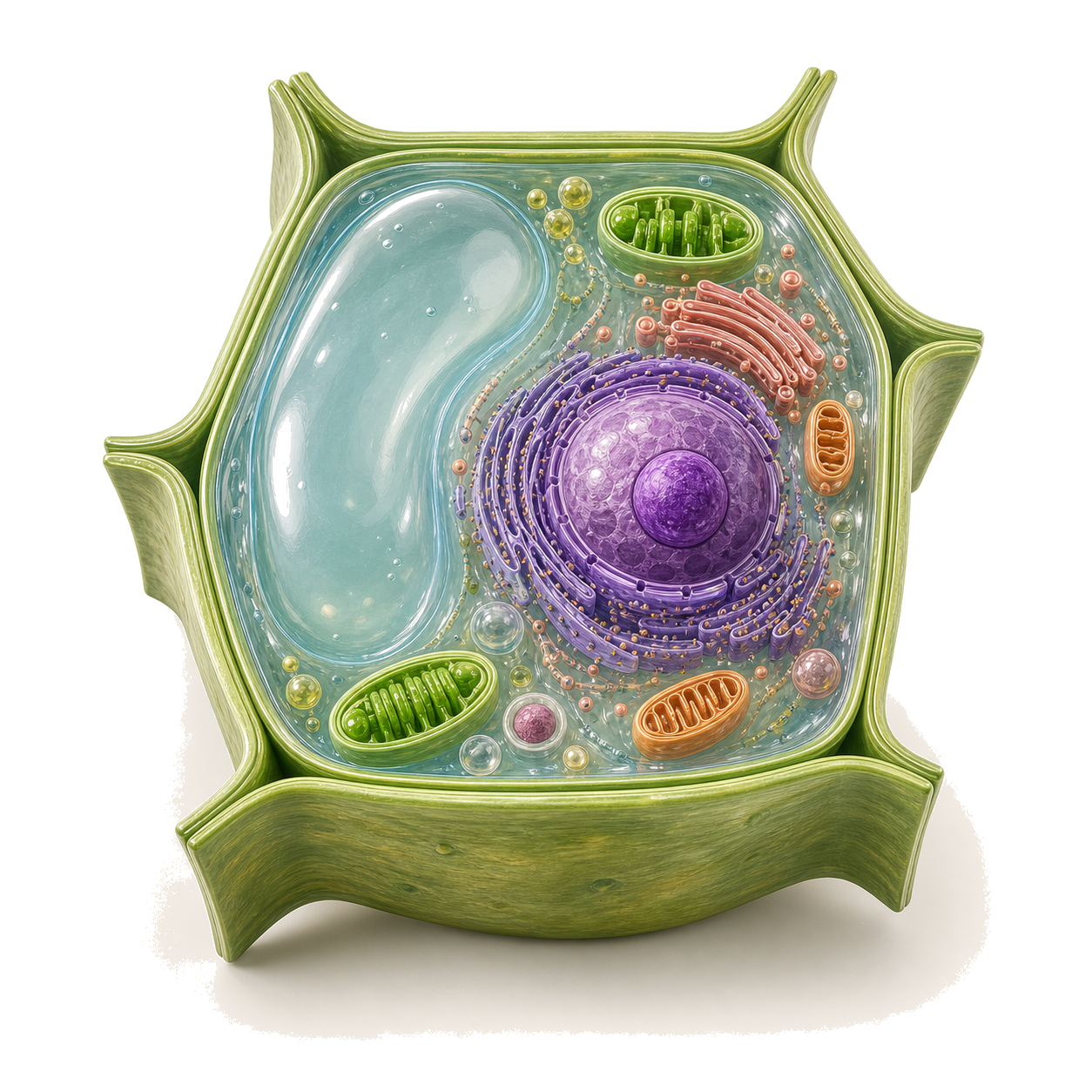
About the Plant Cell
Eukaryotic Cell
Leaves, stems, roots
Plant cells form tissues that store energy, move water, and turn sunlight into sugars.
Clinical and real-world context
A useful non-human baseline for teaching why cell walls and chloroplasts are absent from patient tissue samples.
4 structures to explore
Nucleus
The control center
The nucleus is surrounded by a double membrane called the nuclear envelope, which contains pores that regulate molecular traffic.
The nucleus was one of the first cell structures discovered.
Chloroplast
The light harvester
Chloroplasts convert light energy into chemical energy and give many plant tissues their green color.
A single leaf cell can contain dozens of chloroplasts.
Vacuole
The pressure reservoir
The central vacuole stores water, ions, and small molecules while helping the plant cell remain firm.
Vacuoles can occupy most of a mature plant cell.
Cell Wall
The rigid frame
The cell wall gives plant cells their regular shape and protects the membrane beneath it.
Cell walls help plants stand upright without a skeleton.