Animal Cell
Eukaryotic Cell
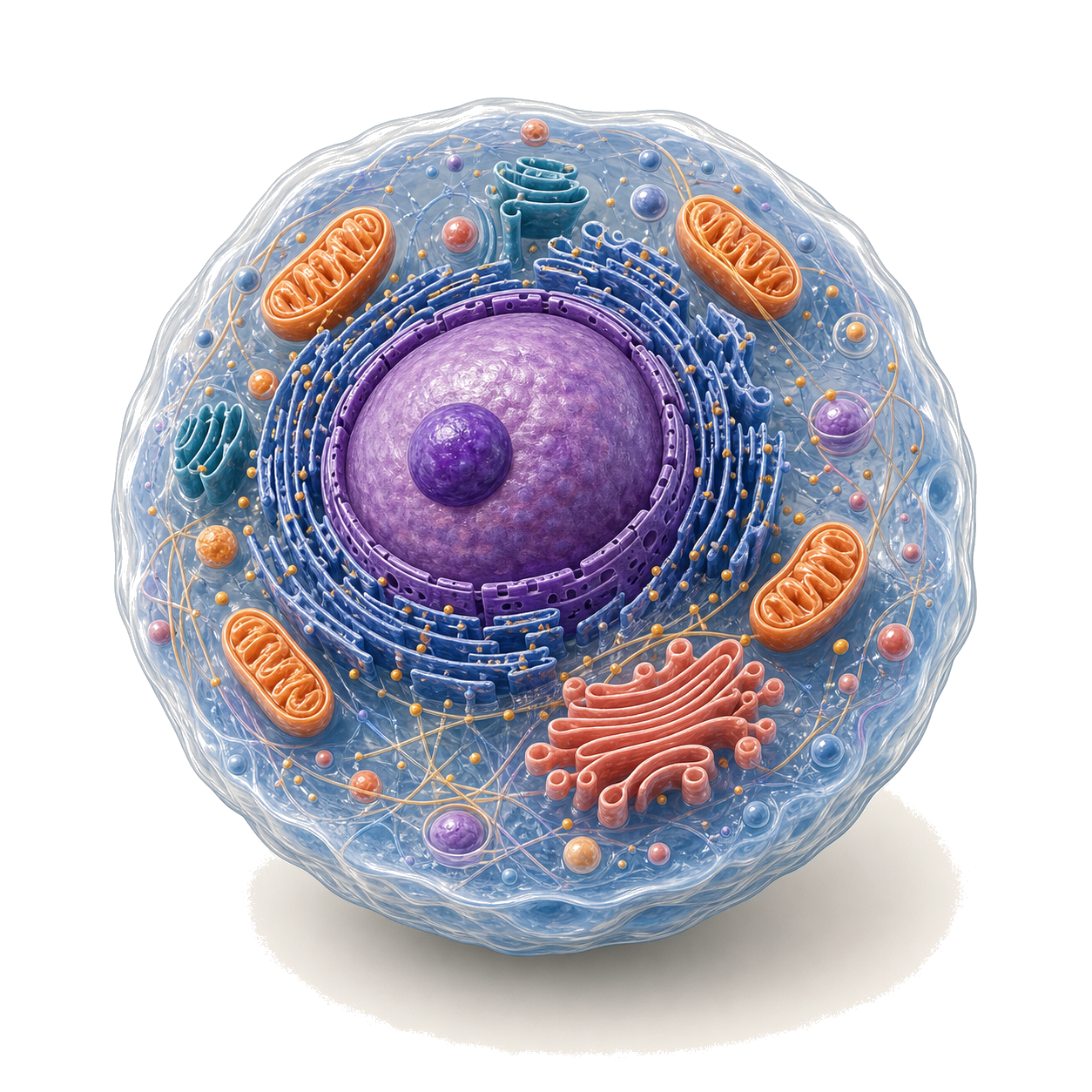
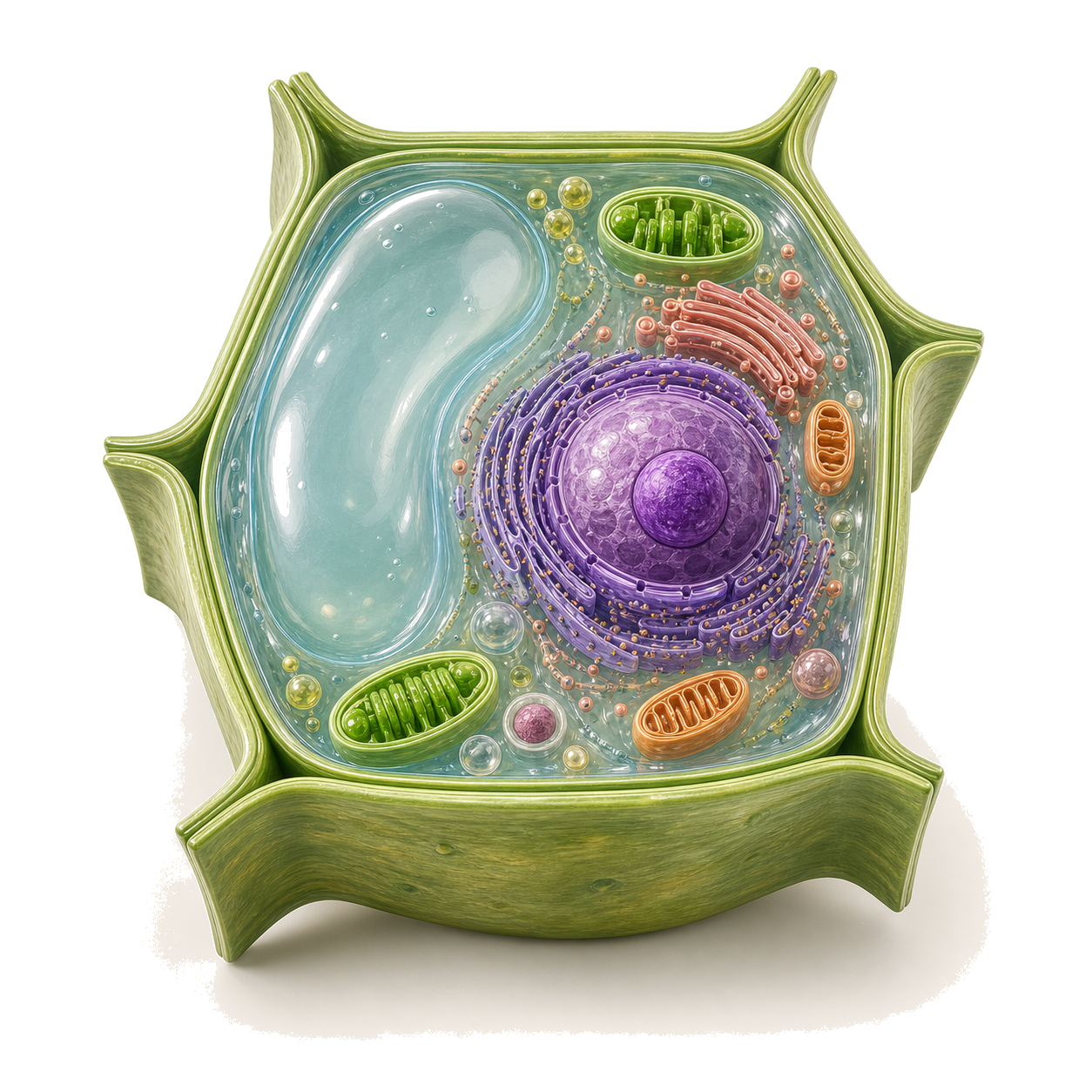
About the Animal Cell
Eukaryotic Cell
Animal tissues
Animal cells form flexible tissues with membranes, internal organelles, and specialized signaling structures.
Clinical and real-world context
This general eukaryotic model helps learners anchor organelle functions before applying them to human tissues and disease mechanisms.
3 structures to explore
Mitochondrion
The energy converter
Mitochondria convert fuel molecules into usable cellular energy through folded inner membranes.
Mitochondria contain their own small DNA genome.
Nucleus
The command room
The nucleus stores chromosomes and regulates which genes are active in a cell.
Not all animal cells keep a nucleus. Mature red blood cells lose theirs.
Golgi Apparatus
The packaging stack
The Golgi apparatus modifies, sorts, and ships proteins and lipids to their destinations.
Secretory cells often have a prominent Golgi apparatus.